
A household command center can be the difference between constantly searching for permission slips, bills, appointment reminders, and grocery lists—or knowing exactly where everything belongs.
Many organizing systems fail because they look beautiful but don’t support everyday life. The best household command center isn’t the most expensive or Pinterest-worthy setup. It’s the one your family naturally uses.
Whether you manage a busy household, work overnight shifts, juggle school schedules, or simply feel overwhelmed by paper clutter, creating one centralized location for important information can dramatically reduce stress.
Why Every Home Needs a Household Command Center
Without a central system, information tends to scatter:
- Mail piles on counters
- Important paperwork disappears
- Appointments get forgotten
- Grocery lists end up on random sticky notes
- School forms get misplaced
- Household responsibilities become unclear
A household command center creates a designated place for the information your family reaches for most often.
The goal is simple:
Reduce friction. Increase consistency.
Choose the Right Location First
The placement of your household command center matters more than the products you buy.
Good locations include:
- Kitchen wall near the refrigerator
- Mudroom entry
- Hallway near commonly used spaces
- Pantry entrance
- Home office corner
Avoid placing it somewhere hidden. Systems work best where daily habits already happen.
Ask yourself:
“Where does mail naturally land?”
“Where do backpacks get dropped?”
“Where do I usually set reminders?”
Start there.
What to Include in Your Household Command Center

Not every home needs the same setup. Keep only what supports your routine.
Common categories include:
Family Calendar
Track:
- School events
- Work schedules
- Appointments
- Sports practices
- Birthdays
- Bill due dates
Digital calendars work well, but many families benefit from a visible monthly overview.
Mail & Paper Management Section

Create categories such as:
- Action Needed
- To File
- Bills
- School Papers
- Coupons
- Shred
This prevents paper from becoming overwhelming.
Weekly Meal Planning Area
Include:
- Meal plans
- Grocery lists
- Takeout menus
- Pantry inventory notes
Important Contacts
Keep quick access information for:
- Doctors
- Schools
- Emergency contacts
- Veterinarians
- Babysitters
- Service providers
Keys & Everyday Essentials
Hooks or trays for:
- Keys
- Sunglasses
- Wallets
- Name badges
- Work essentials
Keep the Household Command Center Simple
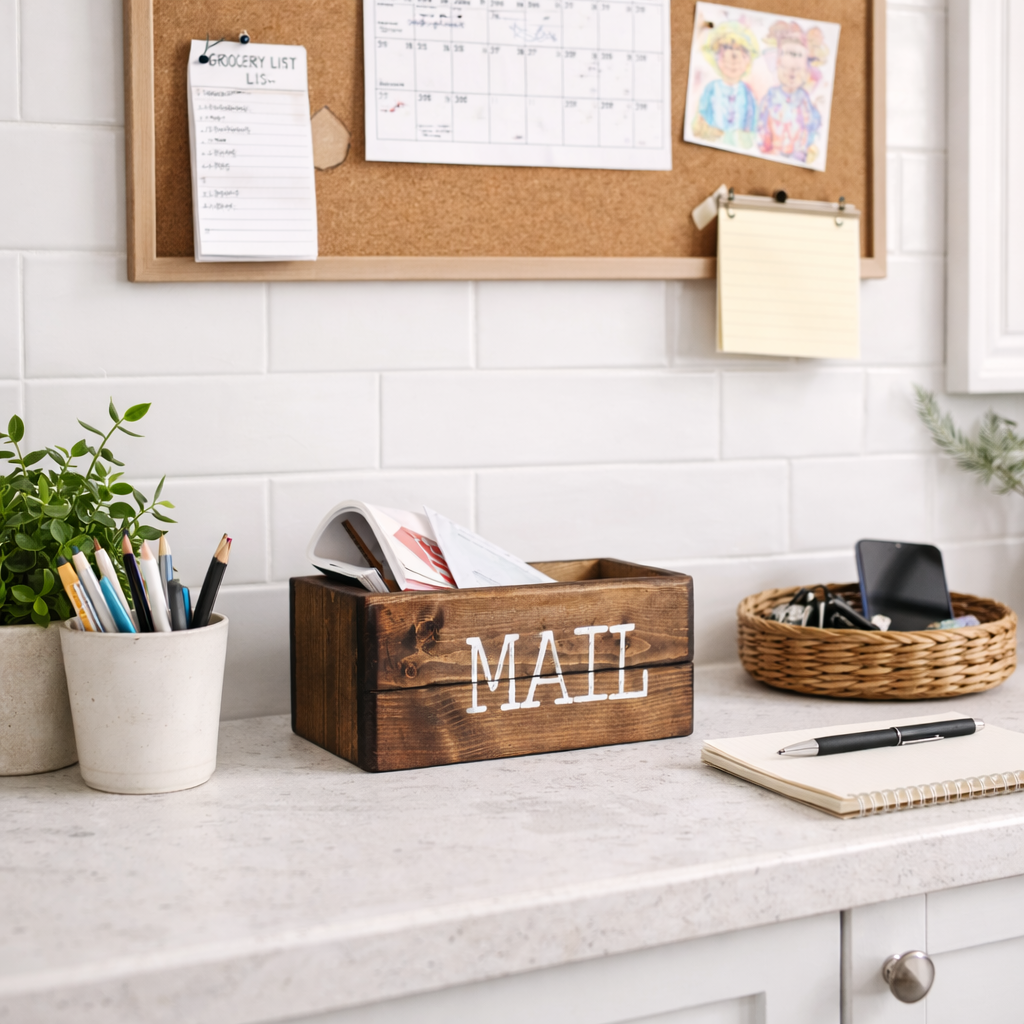
One of the biggest mistakes people make is creating systems with too many categories.
Complicated systems stop being used.
A better rule:
If it takes more than a few seconds to put something away, the system may be too complicated.
Start with fewer sections and adjust later.
Create Habits Around the System

A household command center only works if it becomes part of daily routines.
Try pairing usage with existing habits:
Morning:
- Check calendar
- Grab needed paperwork
Evening:
- Sort mail
- Update appointments
- Add grocery items
Weekly:
- Clear completed papers
- Review schedules
- File or discard documents
Small routines keep clutter from returning.
Household Command Centers for Busy Families
Families with children often benefit from adding:
- Chore tracking
- School paperwork section
- Activity schedules
- Reward charts
- Rotating responsibilities
The simpler the process, the more likely children will participate.
Household Command Centers for Professionals & Shift Workers
Nontraditional schedules often require stronger systems because routines vary.
Focus on:
- Appointment tracking
- Meal planning
- Important paperwork
- Work schedules
- Bills and deadlines
Reducing mental load becomes especially important when rest is limited.
You Don’t Need Perfection—You Need Function
An effective household command center isn’t measured by appearance.
Success looks like:
- Fewer missed appointments
- Less paper clutter
- Reduced stress
- Faster mornings
- Better communication at home
The best organizing systems support life as it is—not life as we wish it looked.
Key Takeaways
- A household command center works best when placed where daily routines already happen.
- Keep categories simple to encourage long-term use.
- Focus on creating habits around the system rather than designing a perfect setup.